
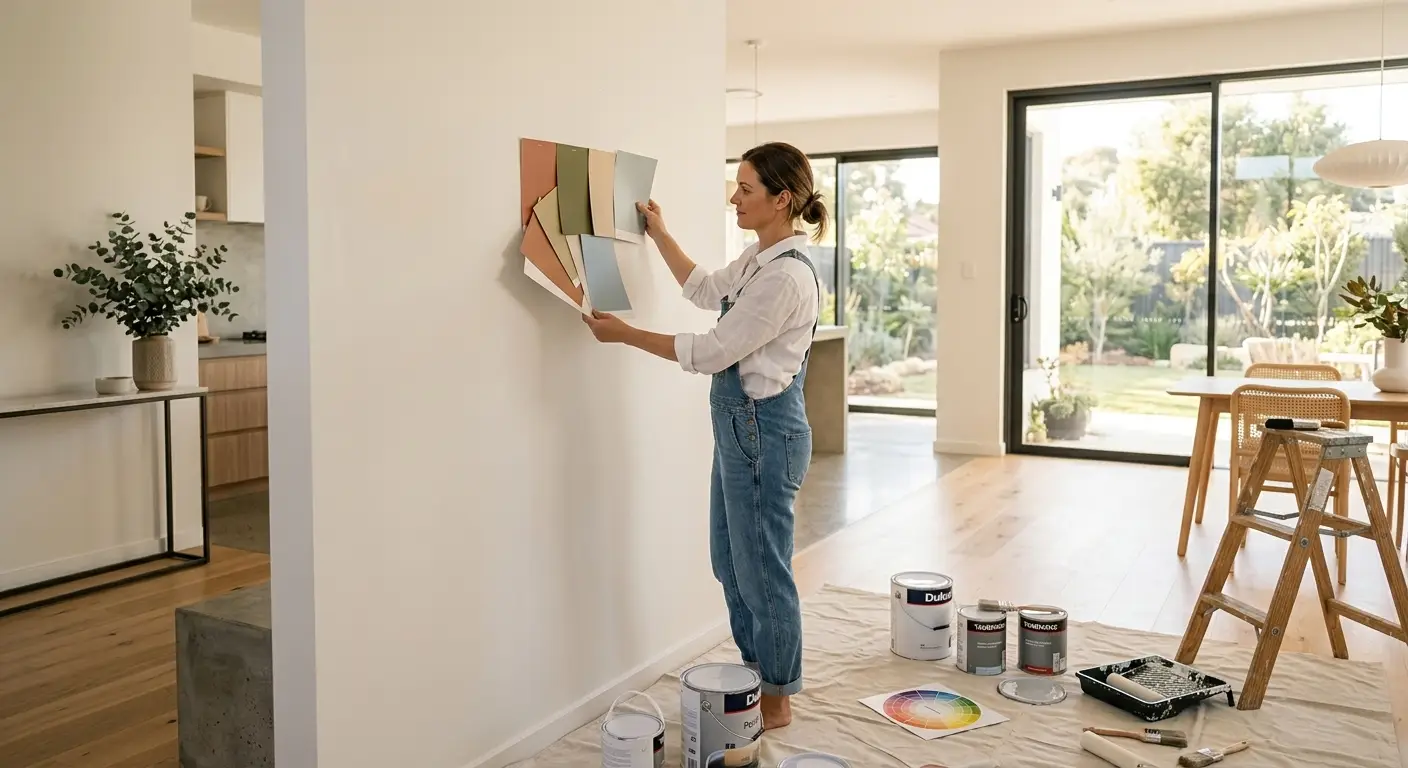
Choosing paint colours for your home is one of the most exciting but often overwhelming parts of any painting project. With thousands of colours available and countless combinations possible, it can be difficult to know where to start. Here is a practical guide to help you make confident colour decisions for your Perth home.
Start with Your Fixed Elements
Before choosing paint colours, look at what cannot be changed — your flooring, cabinetry, fixed furniture, roof tiles and brick or render colour. These are your anchor points and your paint colours should work with them, not against them.
Understand Undertones
Every paint colour has an undertone — a subtle hue beneath the surface colour that affects how it reads in different lighting. White paints can have warm (yellow, pink, cream) or cool (grey, blue, green) undertones. Understanding undertones is the key to avoiding colour clashes.
To identify the undertone of a white or neutral, hold a pure white piece of paper next to the colour chip. The comparison will make the undertone visible immediately.
Consider the Light in Your Home
Natural light has the greatest impact on how paint colour reads in a room. Perth homes tend to have strong, warm light that can wash out pale colours and intensify warm tones. North-facing rooms receive warm morning light. South-facing rooms receive cooler, more consistent light throughout the day. West-facing rooms receive warm, intense afternoon light that can make warm paint colours feel overwhelming.
The 60-30-10 Rule
A simple rule for creating a balanced colour scheme. 60 percent of the room is the dominant colour, typically the walls. 30 percent is a secondary colour, typically soft furnishings and larger furniture. 10 percent is an accent colour used in cushions, artwork and accessories. This ratio creates visual interest without overwhelming the space.
Test Before You Commit
Always test paint colours on the actual wall before buying a full tin. Purchase sample pots and paint large squares on different walls in the room. Observe the colour at different times of day and under both natural and artificial lighting. A colour that looks perfect in the paint shop can read very differently at home.
Popular Paint Colours for Perth Homes in 2026
Interior Walls
- Dulux Vivid White — the most widely used white in Australian homes. Clean, bright and works with almost any colour scheme
- Dulux Antique White USA — a warm white with yellow undertones that suits period homes and warm timber floors
- Dulux Natural White — a soft, slightly warm white that works well in Perth’s bright natural light
- Dulux Hog Bristle — a popular warm grey-beige that works with both warm and cool colour accents
- Dulux Lexicon Half — a cool, slightly grey white that suits contemporary homes with cool-toned fixtures
Feature Walls
Deep greens, warm terracotta tones, navy, charcoal and rich earthy neutrals are popular feature wall choices in Perth homes currently. Dulux Deep Ocean, Dulux Mako, Dulux Forest Night and Solver Paints Deep Forest are popular deep green options. For warm tones, Dulux Raw Sienna, Dulux Burnt Sienna and Solver Earth tones work well.
Exterior Colour Selection
Exterior colour selection requires considering the surrounding environment, neighbouring homes, council requirements and how the colour will read at a distance. In Perth’s bright sunlight, dark exterior colours absorb more heat and can affect interior temperatures. Light to mid-tone colours are generally more practical for Perth exteriors.
Check with your local council before painting the exterior of your home. Some suburbs, particularly heritage areas, have colour restrictions or requirements that must be followed.
Colour Consulting Service
If you are finding colour selection difficult, a professional colour consultant can save you significant time and money by taking the guesswork out of the process. Auzz Painting Service offers colour consulting as part of our painting service. We can advise on colour schemes that work with your fixed elements, lighting and lifestyle before any paint is purchased.
Professional Painting Services in Perth
Auzz Painting Service provides professional interior and exterior painting throughout Perth. With over 20 years of experience and 140+ five-star Google reviews, we deliver high quality results on every job. Call 0474 157 273 or fill in our contact form for a free quote.
Frequently Asked Questions
Dulux Vivid White is the most widely used interior white in Australian homes and remains extremely popular in Perth. Other popular choices include Dulux Natural White, Dulux Antique White USA and Dulux Lexicon Half depending on the home style and personal preference.
Always test the colour on the actual wall before buying a full tin. Paint a large square on the wall and observe it at different times of day under both natural and artificial lighting. A colour that looks perfect in the paint shop can read very differently at home depending on your natural light and existing furnishings.
Yes. Auzz Painting Service offers colour consulting as part of our painting service. We can advise on colour schemes that work with your fixed elements, lighting and lifestyle. Call 0474 157 273 to discuss your project.
Light colours generally make small rooms feel larger and more open. In Perth’s bright light, even medium-tone colours can read relatively light. Avoid very dark colours in small rooms with limited natural light as they can make the space feel smaller and cave-like.
Yes. We provide free no-obligation quotes for all painting projects throughout Perth. Call 0474 157 273 or fill in our contact form to book a free site visit and quote.