
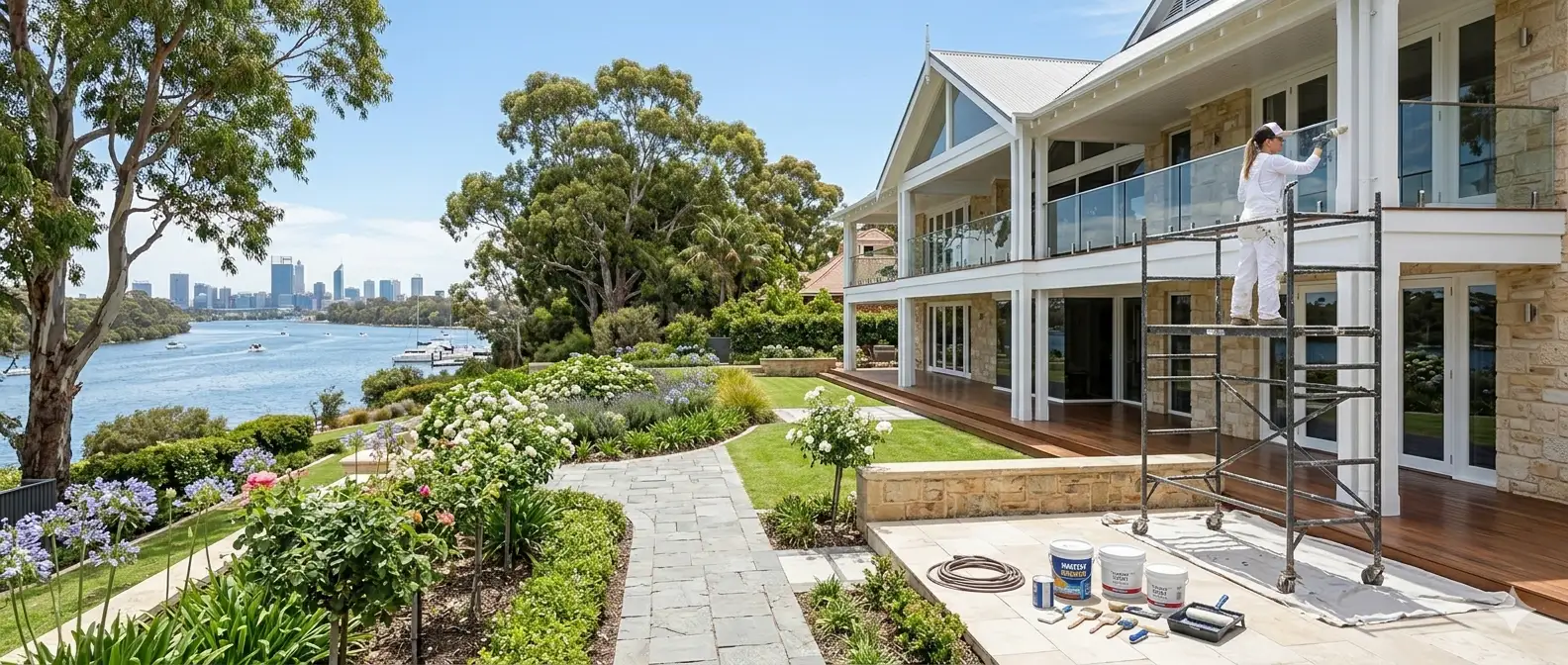
Paint drying time is one of the most common questions homeowners and DIYers ask before starting a painting project. In Perth’s climate — warm summers, mild winters and low humidity for much of the year — paint generally dries faster than in more humid cities. But there are important differences between drying and curing, and getting this wrong is one of the most common causes of paint failure.
Dry to Touch vs Recoat Time vs Full Cure — What’s the Difference?
Dry to touch — the surface feels dry and won’t transfer paint to your finger. This happens quickly, often within 30 minutes to 2 hours for water-based paints in Perth’s conditions. But the paint is still soft underneath.
Recoat time — how long you need to wait before applying the next coat without lifting or dragging the first. Most acrylic paints specify 2–4 hours. Applying too soon causes the paint to peel, drag or develop an uneven texture.
Full cure time — how long it takes for the paint to reach its full hardness and durability. Even when paint looks completely dry, it continues to harden for 2 to 4 weeks. During this period, the surface is more susceptible to marks, scratches and damage from furniture.
Paint Drying Times by Paint Type (Perth Conditions)
| Paint Type | Dry to Touch | Recoat Time | Full Cure |
|---|---|---|---|
| Water-based acrylic (interior) | 1–2 hours | 2–4 hours | 2–4 weeks |
| Water-based acrylic (exterior) | 2–4 hours | 4–8 hours | 2–4 weeks |
| Oil-based paint | 6–8 hours | 16–24 hours | 4–7 days (hard dry); weeks for full cure |
| Primer (water-based) | 30–60 min | 2–4 hours | N/A |
| Primer (oil-based) | 4–6 hours | 8–16 hours | N/A |
Times above are based on average Perth conditions (20–28°C, low humidity). Heat, direct sun and high winds speed drying but can also cause problems — see below.
How Perth’s Climate Affects Paint Drying
Summer (Dec–Mar): Perth’s hot, dry summers mean acrylic paint dries very fast — sometimes within 30 minutes to touch. This sounds ideal but creates risk. Paint applied in direct sun or temperatures above 35°C can dry too quickly, leading to lap marks, brush drag and poor adhesion between coats. Paint in the early morning or late afternoon and avoid painting surfaces in direct sunlight.
Autumn and spring (Apr–May, Sep–Nov): Ideal painting conditions in Perth. Temperatures between 18°C and 28°C with low humidity give consistent, predictable drying times and excellent results for both interior and exterior work.
Winter (Jun–Aug): Perth winters are mild compared to the eastern states, but cooler temperatures and slightly higher humidity slow drying times. Allow extra time between coats and avoid painting on cold, damp mornings. Most professional painters in Perth continue to work through winter without significant issues.
What Happens If You Apply the Second Coat Too Soon?
This is the most common DIY painting mistake. If the first coat hasn’t reached its recoat time, the second coat can:
Pull and drag the first coat off the wall. Create an uneven, streaky finish. Cause bubbling or wrinkling as solvents from the second coat react with the still-wet first coat. Lead to peeling within weeks as adhesion between layers is compromised.
Always check the recoat time on the tin. In practice, most professional painters allow at least 3–4 hours between coats for interior acrylics and 6–8 hours for exterior acrylics, even when the manufacturer’s stated minimum is shorter.
Tips for Faster, More Reliable Drying
Increase ventilation — open windows and doors to move air through the room. Stagnant air slows drying significantly, especially in bathrooms and enclosed spaces.
Use a fan — a box fan aimed across (not directly at) the painted surface will speed up drying without creating uneven drying patterns.
Paint during the warmest part of the day — for exterior work, mid-morning after the dew has dried is usually ideal in Perth.
Don’t paint in rain or high humidity — even in Perth, painting before an approaching storm or on a humid overcast day leads to slow drying and poor adhesion.
Avoid thick coats — thin, even coats dry faster and produce a better finish than one thick coat. Two thin coats always outperform one thick coat.
When to Call a Professional Painter in Perth
If you’re dealing with a large painting project, time-sensitive work, or surfaces that have been previously painted with oil-based products, getting the drying and recoat timing right becomes critical. Professional painters understand Perth’s conditions and plan their work accordingly — scheduling coats to hit the right window and avoid common failures.
Auzz Painting Service provides interior painting and exterior painting across Perth. Call 0474 157 273 or use our quote form to get a free on-site quote.
Frequently Asked Questions
Most water-based acrylic interior paints are dry to touch within one to two hours and ready for a second coat within four hours in normal Perth conditions. In summer when temperatures are higher and humidity is low, paint dries faster. In cooler months, allow extra drying time between coats.
Yes. Increase ventilation by opening windows and doors, use a fan to improve air circulation, and paint during warmer parts of the day. Avoid painting in humid conditions or when rain is forecast. Do not use a heat gun on freshly painted walls as it can cause bubbling and cracking.
While paint may be dry to touch within a few hours, it takes two to four weeks to fully cure and harden. For furniture, wait at least 24 to 48 hours before moving pieces back against freshly painted walls. Avoid placing heavy items or hanging pictures for at least a week.
Exterior paint is typically dry to touch within two to four hours and ready for a second coat in four to eight hours. In Perth’s summer heat, drying times are faster but avoid painting in direct sun or temperatures above 35 degrees as this can affect adhesion and finish quality.
Applying a second coat before the first is fully dry can cause the paint to lift, drag, peel or develop an uneven texture. Always check the manufacturer’s recoat time on the tin and err on the side of waiting longer rather than shorter between coats.