
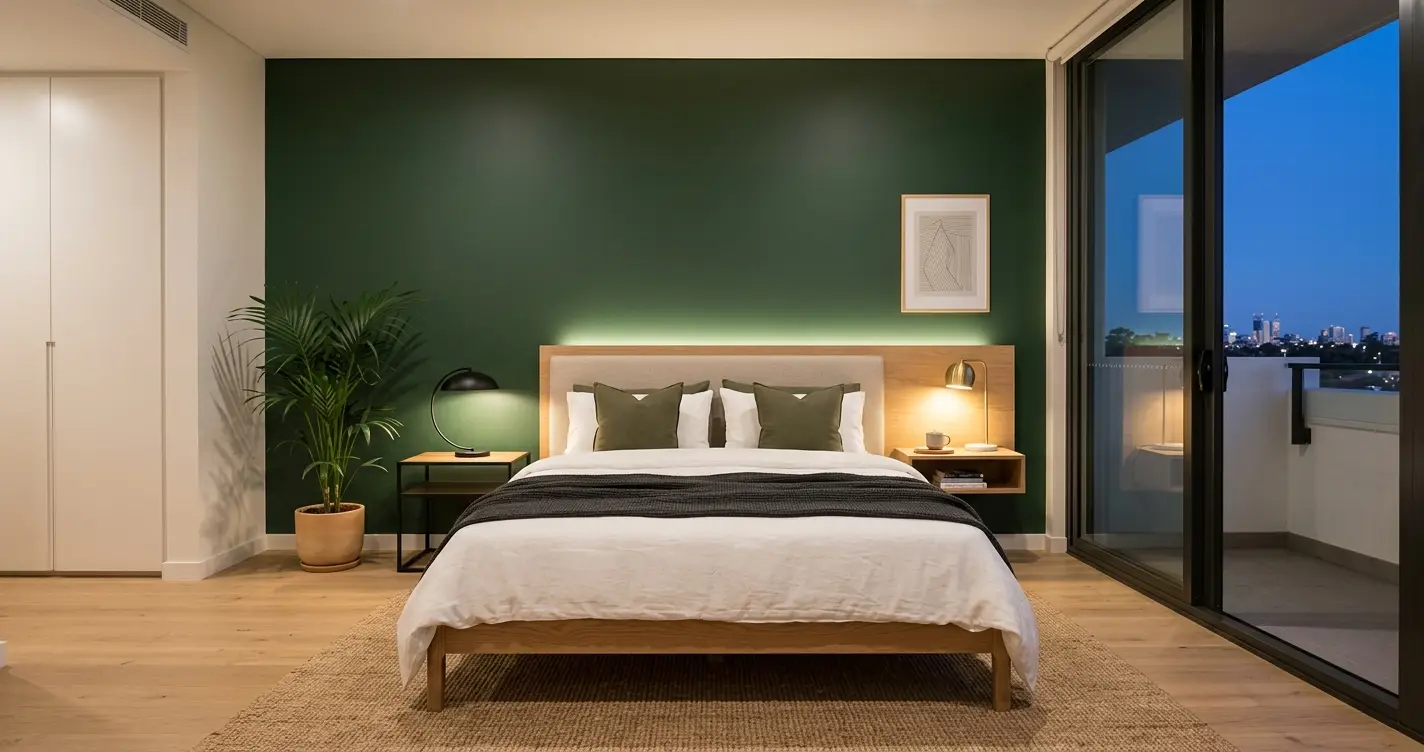
A feature wall is one of the most effective ways to add personality to a room without repainting everything. Done right, it creates depth, draws the eye to an architectural focal point, and completely changes how a space feels. Done wrong, it looks patchy and flat. This guide covers how to do it properly.
What Makes a Good Feature Wall?
The best feature walls work with the room’s existing layout — not against it. The most natural choices are the wall behind a bed or sofa, the wall a fireplace sits on, or the first wall you see when you walk into the room. Avoid walls broken up by too many windows or doors; the impact gets lost.
Colour choice matters more on a feature wall than anywhere else in the room. Deep colours — navy, forest green, charcoal, terracotta — tend to work better than pastels because they create the contrast that makes a feature wall actually stand out. The colour should tie back to something already in the room: cushions, artwork, furniture upholstery.
What You’ll Need
Before you start, gather: drop sheets, painter’s tape (Scotch Blue or Frog Tape), a roller and tray, a 50–75mm angled brush for cutting in, sandpaper (120 grit), a damp cloth, a small bucket of sugar soap or wall cleaner, and your chosen paint. For most feature walls, a quality interior acrylic in a low-sheen or satin finish gives the best result — flat finishes show marks more easily and make it harder to see the colour’s true depth.
Step-by-Step: How to Paint a Feature Wall
Step 1 — Prepare the surface. Wipe down the wall with a damp cloth and sugar soap to remove dust, grease and fingerprints. Fill any holes or cracks with interior filler and sand smooth once dry. Scuff any glossy sections lightly with 120-grit sandpaper so the new paint has something to grip.
Step 2 — Mask up. Run painter’s tape along the ceiling line, skirting boards, door architraves and any adjacent walls. Press the tape edge firmly with a scraper or your fingernail to stop paint bleeding underneath. Lay drop sheets over the floor and any furniture nearby.
Step 3 — Prime if needed. If you’re going over a dark colour, a patchy surface, or raw filler, prime first. A tinted primer (matched to your feature wall colour) will cut your topcoat coats from three to two and improve coverage significantly.
Step 4 — Cut in the edges. Use your angled brush to paint a 5–7cm band along all edges — ceiling, corners, skirting, architraves. Work in sections: do one edge at a time and move to the roller before the cut-in dries. Keeping a wet edge between your brush work and roller work prevents lap marks.
Step 5 — Roll the main field. Load your roller evenly and work in a W or M pattern across the wall. Don’t press too hard — let the roller do the work. Keep a wet edge as you move across. One coat rarely covers fully on a feature wall colour; plan for two coats minimum.
Step 6 — Second coat. Allow the first coat to dry fully — usually two to four hours for quality acrylic in Perth conditions. Lightly inspect for missed spots before rolling the second coat in the opposite direction to the first.
Step 7 — Remove tape and touch up. Pull the tape back at a 45-degree angle while the paint is still slightly tacky — not wet, not fully dry. If any bleed-through occurred, touch up with a small brush once fully dry.
Common Mistakes to Avoid
The most common problem is skipping surface prep — paint applied over dusty or greasy walls peels within months. The second is painting with a dry roller and pressing too hard, which leaves a textured, uneven finish. Third is removing the tape too late, when the paint has fully cured and pulls away cleanly taking chunks with it.
If you’re using a very dark colour — black, deep navy or charcoal — factor in three coats rather than two. Dark pigments take longer to build full, even coverage and any patchy spots show dramatically more than they would on a light wall.
For a professional finish on your feature wall, Auzz Painting Service handles interior repaints across Perth. Get a free quote — we’ll advise on colour, finish and prep for your specific wall.
Frequently Asked Questions
Most feature walls need two coats of topcoat, plus a primer coat if you’re going over a dark colour or patchy surface. Deep colours like navy, charcoal and forest green often need three coats to achieve full, even coverage.
Low-sheen or satin finish acrylic is the best choice for most feature walls. It shows the colour’s true depth, is easier to clean than flat paint, and doesn’t reflect light the way a semi-gloss would. Flat finish works in low-traffic rooms but marks more easily.
Choose the wall that is naturally the focal point of the room — behind the bed in a bedroom, behind the sofa in a living room, or the wall a fireplace or TV unit sits against. Avoid walls with too many windows or doors as the impact gets broken up.
Prime if you’re covering a dark colour, painting over bare plaster or filler, or if the surface is patchy or stained. A tinted primer matched to your feature wall colour will improve coverage and reduce the number of topcoats needed.
A standard feature wall takes two to four hours including prep, cutting in and two coats — allowing for drying time between coats. Larger walls or those needing extensive prep or three coats will take longer. A professional painter can typically complete a feature wall in a half day.