
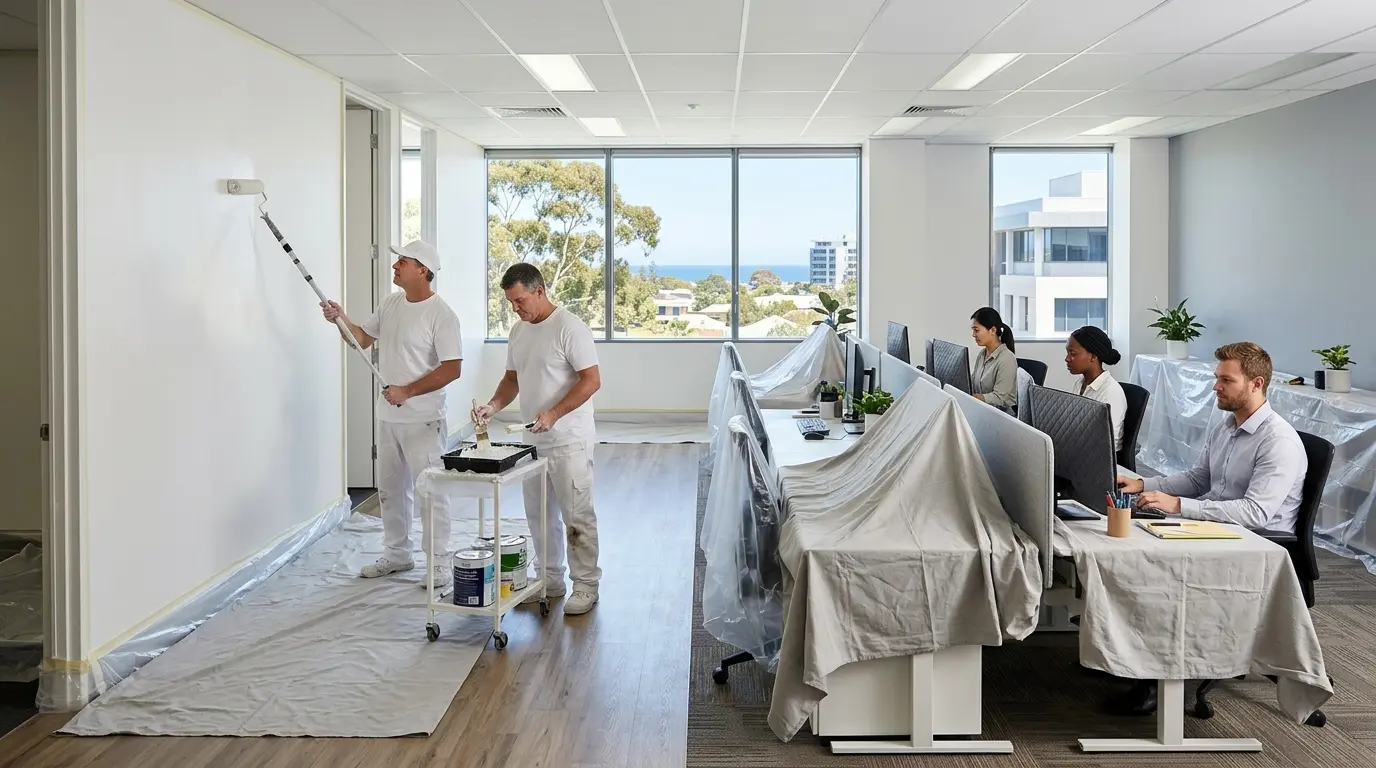
Repainting an occupied office is a different challenge from repainting an empty one. The work has to happen around people, equipment, furniture and the daily rhythm of a business. This guide covers what disrupts an occupied office during a repaint, how to plan and sequence the work, and what to ask before you hire for office painting in Perth.
Short answer: An occupied office repaint is manageable with the right sequencing, clear communication with staff and building management, and a painter who has done commercial work before. The key is planning the job before work starts, not after.
What actually disrupts an occupied office
There are four main disruption points.
Noise. Preparation is the noisiest part of any repaint. Sanding, filling, scraping and high-pressure cleaning carry through an open-plan office. Painting itself is relatively quiet.
Odour. Paint fumes are the concern staff raise most often. The level depends on the products used and how well the space is ventilated. Ask any painter what products they intend to use and what ventilation they plan to provide.
Access and movement. Painters need clear access to walls, ceilings and trims, which means moving furniture, monitors and filing cabinets. Agree how that is managed, and who is responsible, before the job starts.
IT and equipment. Computers, servers, printers and screens need protection from dust and overspray. If you have a server room or sensitive hardware, flag it at the quoting stage.
Planning and sequencing the work
There is no single correct sequence for an office repaint. The right approach depends on the size of the space, how many staff are present and whether any areas can be vacated temporarily.
Some offices can be done in sections, moving through one part of the floor while staff occupy another. Others suit painting common areas and corridors first, then individual offices or meeting rooms one at a time. Reception and client-facing spaces are often prioritised because they carry the most visible wear.
Decide the sequence before work starts, not on the day. When you request a quote from commercial painters in Perth, use the site visit to map out an approach that suits your layout and occupancy.
Questions to ask about sequencing
- Can the job be staged by zone? So staff always have a functional area to work from.
- Which areas need to be fully vacated? Server rooms or storage areas may need clearing regardless of sequence.
- What is the drying time between coats? This affects how long an area is out of action.
- How will furniture and equipment be moved and protected? Clarify who handles it and what protection is provided for floors, desks and IT equipment.
Communicating with staff and building management
A repaint goes more smoothly when staff know what to expect. Give your team advance notice of which areas will be painted, when access will be restricted and what they need to do with their own desks and equipment.
For offices in strata or managed commercial buildings, check with building management before work starts. There may be requirements around contractor access, hours of work, lift use, waste disposal or protection of common areas, and some buildings require specific insurances or contractor registration. If your building has a body corporate or facilities manager, involve them early. Delays from access issues are avoidable when they are sorted at the planning stage.
Protecting floors and equipment
Hard floors, carpet tiles and raised access flooring all need protection during a repaint. Drop sheets and plastic sheeting are standard, but the quality of the protection matters. Ask how floors are protected in a working office and whether hard coverings are used over carpet in high-traffic areas.
For equipment, ask how monitors, keyboards and exposed hardware will be covered during painting and sanding. Dust from prep travels further than most people expect, so protection should be in place before prep starts, not just during painting.
Finishes and odour: what to ask
Office walls take a lot of contact: people brush against them, chairs scuff them, and hands touch surfaces near light switches and door frames. A finish that cleans easily and holds its appearance is worth specifying.
Ask the painter what finish they intend to use on walls, ceilings and trims, and why. Ask about odour levels and drying times for those products. If ventilation in your office is limited, raise that at the quote stage. For more on interior finishes, see our interior painting service in Perth.
What to ask before you hire
Not every painter has experience in occupied commercial spaces. Ask directly before you commit.
- Have you painted occupied offices before? A painter who has only done residential work may not have a process for access, equipment protection or building management requirements.
- What is your plan for odour and ventilation? You want a specific answer, not a general assurance.
- Can you provide a certificate of insurance? Public liability insurance is standard for commercial work. Ask for it before work starts.
- How do you handle furniture and IT equipment? Clarify responsibility and process up front.
- What does the prep phase involve and how long does it take? Prep generates most of the noise and dust, so knowing its scope helps you brief staff.
Getting a painting quote in Perth from a painter who works in commercial spaces lets you ask these questions on site before you commit.
Get a free on-site quote
Auzz Painting Service handles office, retail, warehouse and commercial repaints across the Perth metro area. The process starts with a free, no-obligation on-site visit where you can walk through the space, discuss sequencing, raise concerns about access or equipment, and get a clear scope before any work is agreed. With 140+ Google reviews, the team has worked across a range of commercial environments.
Request a free on-site quote or call 0474 157 273.
Frequently asked questions
Yes, with the right planning. Staging the work by zone, protecting equipment and communicating clearly with staff makes it possible to repaint an occupied office without sending everyone home. The specifics depend on the layout and size of the space, which is why an on-site quote is the right starting point.
This varies between painters and jobs, so agree it before work starts. Some painters include furniture moving in their scope; others expect the client to clear the space. Clarify this at the quoting stage.
In most managed commercial buildings, yes. There are often requirements around contractor access, hours, lift use and insurance. Check with your building manager or body corporate before booking a painter.
Office walls benefit from a finish that cleans easily and holds up to regular contact. The right specification depends on the space, so discuss it with the painter at the quote stage rather than deciding in advance.
Planning ahead gives you time to coordinate with building management, brief staff and sequence the work properly. The more complex the space or the higher the occupancy, the more lead time helps. Discuss timing at the on-site quote.