
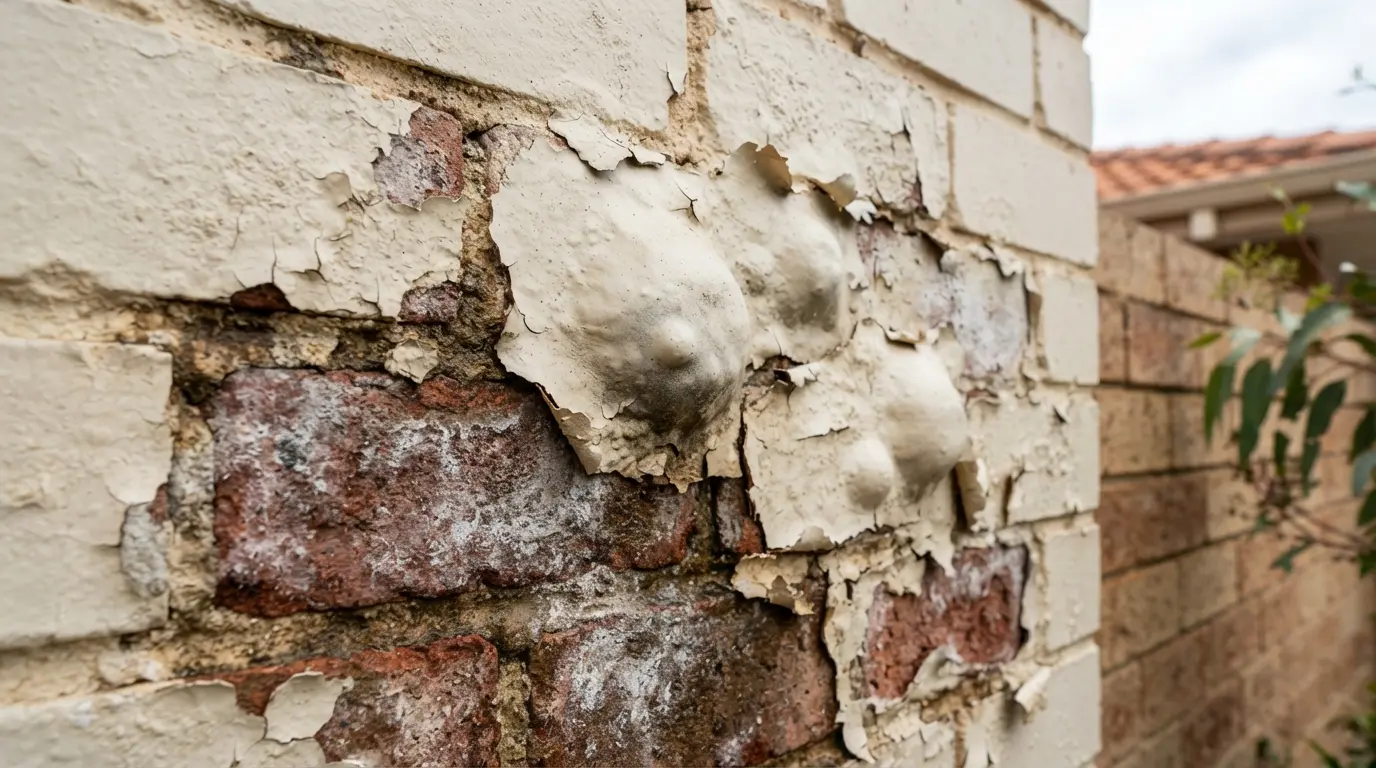
Peeling paint is one of the most frustrating problems a Perth homeowner can face — especially when it appears on a wall that was repainted only a few years ago. Understanding why paint peels is the first step to fixing it properly and making sure it does not happen again. This guide covers the main causes of peeling paint in Perth homes, how to diagnose your specific situation, and the right approach to fixing it.
Why Does Paint Peel?
Paint peels when the bond between the paint film and the surface underneath breaks down. This adhesion failure can happen between the paint and the substrate (the wall surface itself) or between two layers of paint. In Perth homes, there are several common causes of this adhesion failure.
Main Causes of Peeling Paint in Perth Homes
1. Moisture and Water Damage
Moisture is the number one cause of peeling paint in Perth homes. Water getting behind the paint film breaks the adhesion bond and causes the paint to lift, bubble and eventually peel away. Common moisture sources include leaking roofs or gutters, rising damp through slab or footings, condensation in bathrooms and laundries, poor waterproofing around windows and doors, and irrigation systems spraying onto external walls.
In Perth, the wetter winter months expose any existing moisture issues quickly. West-facing walls that catch winter rain and have poor drainage at the base are particularly vulnerable. Before repainting any peeling surface, the moisture source must be identified and fixed — otherwise the new paint will peel again within months.
2. Poor Surface Preparation
The most common cause of premature paint failure in Perth is poor preparation before painting. Paint will not adhere properly to dirty, dusty, oily, glossy or loose surfaces. If the surface was not properly cleaned, sanded, deglossed or primed before the paint was applied, adhesion failure is almost inevitable regardless of how good the paint product was.
This is particularly common on previously painted surfaces where the existing paint was glossy and was painted over without proper deglossing or sanding first. The new paint bonds to the gloss surface poorly and peels away in sheets when exposed to heat or moisture.
3. Painting in Wrong Conditions
Perth’s climate creates specific challenges for exterior painting. Painting in extreme heat causes paint to dry too quickly on the surface before it has properly bonded to the substrate — a condition known as hot-face drying. This is common in Perth summers when afternoon temperatures regularly exceed 35 degrees and exposed west-facing surfaces can reach 50 to 60 degrees surface temperature.
Painting in cold or damp conditions in Perth’s winter months — particularly in the hills — can also cause problems. Paint applied in temperatures below 10 degrees or onto surfaces that are damp from overnight dew or recent rain will not cure properly and can peel.
4. Wrong Primer or No Primer
Primer is not optional on bare or porous surfaces. It seals the surface, provides a uniform base for topcoats to bond to, and in some cases provides additional functions like moisture resistance or stain blocking. Skipping primer on bare plaster, bare timber, repaired surfaces or previously unpainted surfaces is one of the fastest routes to early paint failure.
Using the wrong primer is also a common problem — an interior primer on an exterior surface, for example, or a water-based primer directly over a heavily chalked oil-based painted surface without an oil-based primer as a tie coat first.
5. Paint Applied Too Thickly
Applying paint too thickly — usually the result of using too little thinner or applying too many wet coats in quick succession — prevents the paint from drying and curing correctly through its full depth. The surface skins over while the paint underneath remains soft, leading to wrinkling, bubbling and eventually peeling.
6. Old Paint at the End of Its Life
External paint in Perth’s climate typically lasts 8 to 15 years depending on surface type, product quality and sun exposure. Once paint reaches the end of its service life it begins to chalk, crack and eventually delaminate from the surface. This is a natural process and simply means the surface is due for a proper repaint — not a cause for concern, just a maintenance task.
How to Identify the Cause of Your Peeling Paint
Before deciding on a repair approach, it helps to identify what type of peeling you are dealing with:
- Paint peeling in large sheets — usually a preparation failure, gloss-over-gloss issue or primer issue
- Paint bubbling then peeling — usually a moisture issue, often active (meaning the moisture source is still present)
- Paint chalking and flaking — usually old paint at end of life, normal weathering
- Paint peeling at edges and corners — usually water ingress at joins, inadequate caulking or inadequate edge sealing
- Paint peeling in bathroom or laundry — usually condensation or inadequate ventilation
How to Fix Peeling Paint Properly
Step 1 — Fix the Cause First
This is the most important step and the one most often skipped. If moisture is causing the peeling, fix the moisture source before painting. Check gutters for blockages or leaks, check roof flashings, repoint cracked mortar joints, reseal around windows and doors, fix rising damp issues. Painting over an active moisture problem without fixing the source will result in the new paint peeling within months.
Step 2 — Remove All Loose Paint
All loose, peeling and flaking paint must be removed before repainting. Scrape back to firm edges, then sand the edges of the remaining paint smooth so there is no ridge between the old paint and the bare surface. Wire brushing, heat guns and chemical strippers may be needed on stubborn areas. Do not paint over loose paint — it will peel again immediately.
Step 3 — Prepare the Surface Properly
Once loose paint is removed, the bare surface needs proper preparation. Fill cracks and holes with appropriate fillers, sand smooth, then prime bare areas before painting. On exteriors, high-pressure washing of the entire surface removes dirt, mould, chalking and contaminants that would otherwise prevent adhesion.
Step 4 — Prime Bare Areas
Any areas where paint has been removed back to bare surface need to be primed before topcoating. Use an appropriate primer for the substrate — a quality exterior primer on render and masonry, a timber primer on bare wood, a metal primer on any exposed metal surfaces. Allow primer to cure fully before topcoating.
Step 5 — Apply Quality Topcoats
Apply two coats of a quality exterior acrylic topcoat, allowing the first coat to dry fully before applying the second. In Perth we recommend Dulux Weathershield for standard exteriors and Dulux Weathershield Maximum Stretch for rendered surfaces or coastal locations where movement and salt air are factors. Apply in appropriate conditions — avoid painting in the middle of a Perth summer afternoon on west-facing walls.
When to Call a Professional
Small areas of peeling paint on interior walls can often be managed as a DIY repair with basic preparation and quality materials. For exterior peeling, larger areas or situations where the moisture cause is not clear, calling a professional painter is the right approach. Incorrect preparation will result in the new paint failing again — the cost of doing it twice far exceeds the cost of getting it right the first time.
Auzz Painting Service provides free on-site assessments for peeling paint situations throughout Perth. We identify the cause, recommend the right repair approach and provide a fixed written quote. Call 0474 157 273 or fill in our contact form.
Frequently Asked Questions
Premature exterior paint failure is almost always caused by inadequate surface preparation, a moisture problem, painting in inappropriate conditions or the wrong product choice. If properly prepared and applied with quality products in suitable conditions, exterior paint in Perth should last 10 to 15 years on most surfaces. Failure within 2 to 5 years nearly always points to a preparation or moisture issue.
No. Painting over peeling paint is one of the most common mistakes homeowners make. The new paint will not bond to the loose existing paint and will peel away along with it, often within weeks. All loose paint must be removed, the surface properly prepared and primed before any new topcoat is applied.
Usually yes. Peeling paint in bathrooms and laundries is almost always caused by moisture — either condensation from poor ventilation or water getting behind tiles or into the wall cavity. Improving ventilation (exhaust fan or open window during and after showering) and using a moisture-resistant paint system specifically designed for wet areas will address most bathroom peeling paint issues.
The best way to prevent exterior paint peeling in Perth is to ensure thorough preparation before painting (clean, sand, prime), use quality exterior acrylic paints rated for Perth’s UV conditions, address any moisture ingress issues before painting, and avoid painting in extreme heat or on surfaces that are damp. Scheduling exterior painting for Perth’s milder months (spring and autumn) rather than summer peaks also improves adhesion and finish quality.
Yes. We assess peeling paint situations throughout Perth, identify the underlying cause, and provide a fixed quote covering the full repair — preparation, priming and topcoating. We do not paint over problems. Call 0474 157 273 or fill in our contact form to book a free on-site assessment.