Paint primer is one of the most misunderstood products in painting. Some Perth homeowners skip it to save time and money. Others apply it unnecessarily to surfaces that do not need it. Getting the primer decision right is one of the most important calls in any painting job because the wrong decision in either direction costs money. This guide explains exactly what paint primer is, when you need it and when you can skip it.
What is Paint Primer?
Paint primer is a preparatory coating applied to a surface before the topcoat paint. Its primary function is to improve adhesion between the surface and the paint, but depending on the type of primer it also seals porous surfaces, blocks stains, provides corrosion protection on metal, or bridges the gap between incompatible paint systems. Primer is formulated specifically for this preparatory role and is different in chemistry and function from the topcoat paints applied over it.
What Does Primer Actually Do?
Improves Adhesion
The most fundamental function of primer is to create a surface that paint can grip properly. Bare plaster, bare timber, bare metal and previously unpainted surfaces are often difficult for topcoat paints to bond to directly. A primer penetrates the surface, creates a mechanical key and provides a consistent base that the topcoat can adhere to reliably. Without primer on these surfaces, topcoat paint is significantly more likely to peel, chip or fail prematurely.
Seals Porous Surfaces
Bare plaster, new render, bare timber and raw masonry are porous and will absorb paint unevenly if applied without a sealer or primer coat. This uneven absorption causes patchy, inconsistent colour in the topcoat and significantly increases the amount of topcoat paint needed to achieve an even finish. A primer seals the surface and creates a consistent, non-porous base that the topcoat can cover uniformly.
Blocks Stains
Water stains, smoke stains, nicotine staining, rust marks and tannin bleed from timber can bleed through standard topcoat paints regardless of how many coats are applied. A stain-blocking primer locks these stains in and prevents them from telegraphing through the finished paint. In Perth homes, tannin bleed from raw timber and water stains from roof leaks are the two most common situations requiring a stain-blocking primer.
Provides Corrosion Protection
On bare metal surfaces including gutters, downpipes, window frames, balustrades and structural steel, primer provides a critical layer of corrosion protection. Metal primers contain rust-inhibiting compounds that slow the oxidisation process and provide a surface that topcoat paints can adhere to. In Perth’s coastal suburbs where salt air accelerates metal corrosion, the correct metal primer is not optional.
When Do You Need Primer?
Bare or New Surfaces
Any surface that has never been painted before needs primer. Bare plaster, new render, raw timber, bare masonry and new concrete all require a primer or sealer coat before topcoat application. Skipping primer on bare surfaces is one of the most reliable ways to get a paint job that fails within a few years.
Repaired Areas
Where cracks have been filled and sanded, the filler creates a bare, porous surface that absorbs paint differently to the surrounding painted wall. Applying primer to filled and sanded repair areas before topcoating ensures the repairs do not show as dull or different-coloured patches through the finished paint. This is called spot priming and is standard practice on any quality repaint.
Bare Metal
Any bare or rusting metal surface requires a metal primer before topcoating. Bare metal left unprimed will rust rapidly under any paint film and the paint will fail quickly as corrosion spreads beneath it. In Perth’s coastal suburbs, metal primer is even more critical as the salt air environment aggressively attacks bare metal.
Stain or Bleed Situations
Where water stains, smoke stains, nicotine or tannin bleed are present, a stain-blocking primer is required before topcoating. Standard topcoat paints will not lock in these stains regardless of the number of coats applied. A single coat of a quality stain blocker like Dulux Stain Block or similar will lock the stain in permanently before topcoating.
Changing from Dark to Light Colours
When repainting from a very dark colour to a significantly lighter colour, a tinted primer in a mid-tone can significantly reduce the number of topcoats needed to achieve full coverage. Without a primer, going from a deep charcoal to a light cream can require three or more topcoats. A tinted primer can reduce this to two topcoats and save time and product cost.
When Can You Skip Primer?
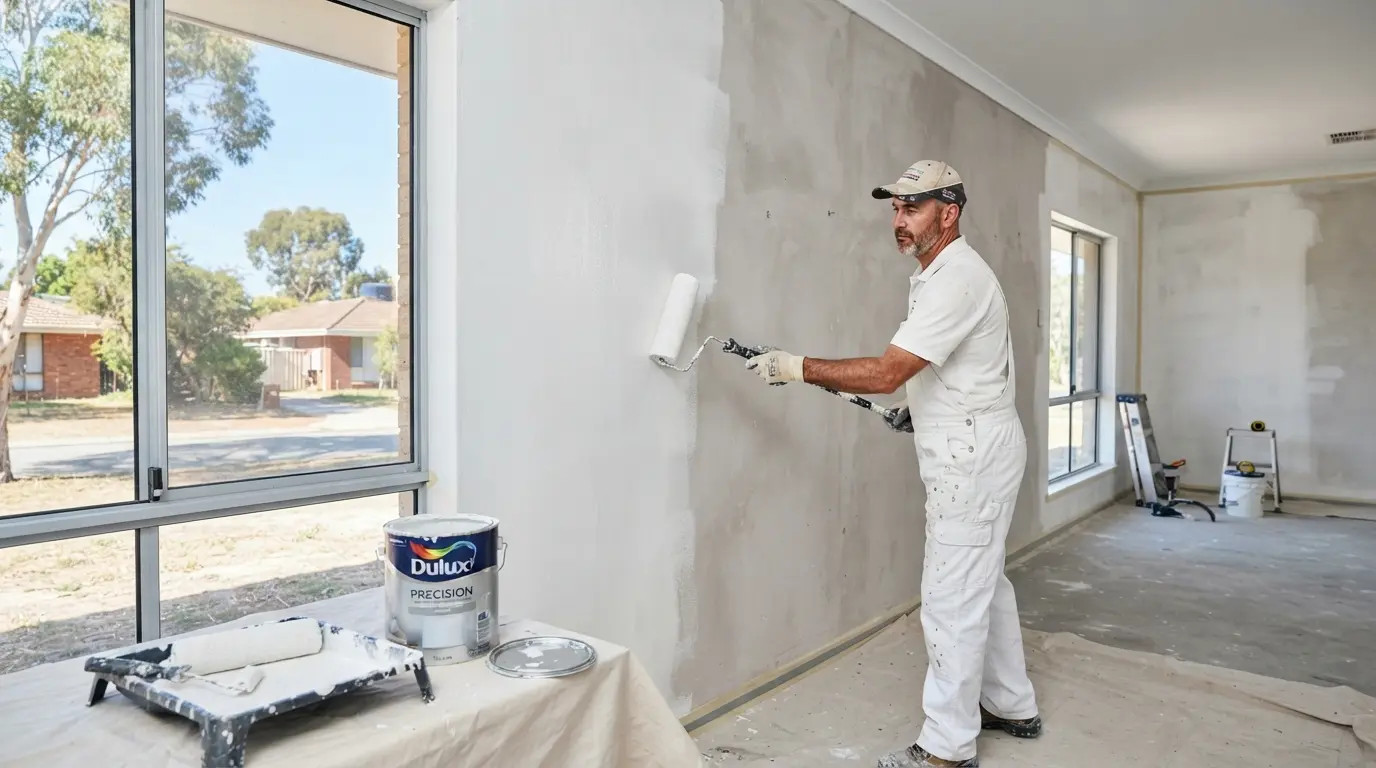
Primer is not always necessary. On previously painted surfaces in good condition where the existing paint is well adhered, not glossy and in a similar colour family to the new paint, a quality topcoat can often be applied directly without primer. This is the most common situation in a standard interior repaint of a well-maintained Perth home where the existing paintwork is sound.
Modern high-quality topcoat paints like Dulux Wash and Wear have improved adhesion properties that allow direct application to previously painted surfaces in good condition without a separate primer coat in many situations.
Types of Primer Used in Perth Homes
- Acrylic primer sealer — the most commonly used primer for interior and exterior walls in Perth homes. Suitable for plaster, render and masonry.
- Oil-based primer — used as a tie coat over old oil-based paint before applying water-based topcoats, and on bare timber where water-based primers may raise the grain excessively.
- Metal primer — rust-inhibiting primers for bare or rusting metal surfaces. Essential on gutters, downpipes, balustrades and window frames.
- Stain-blocking primer — specifically formulated to lock in water stains, smoke, nicotine and tannin bleed. Products like Dulux Stain Block and Zinsser BIN are the most reliable options.
- Timber primer — penetrating primers specifically formulated for raw timber, allowing for the movement and porosity of timber substrates.
Do I Need Primer for My Painting Job?
Our team assesses every surface at the quote stage and specifies primer where it is required. We include spot priming of repaired areas as standard on all interior repaints and full primer coats on any bare or previously unpainted surfaces. If you are unsure whether your painting job needs primer, call us on 0474 157 273 or fill in our contact form and we will assess the surfaces and advise at no charge.
Frequently Asked Questions
It depends on the condition of the existing surface. On previously painted walls in good condition where the existing paint is well adhered and not glossy, a quality topcoat can often be applied directly without primer. On bare plaster, new render, repaired areas or walls with staining, primer is required. Our team assesses every surface at the quote stage and specifies primer where it is needed.
Skipping primer on bare plaster causes uneven paint absorption resulting in patchy, inconsistent colour in the topcoat. The porous plaster absorbs paint at different rates across the surface creating a blotchy finish that does not improve with additional topcoats. A primer sealer applied to bare plaster before topcoating seals the surface and creates a consistent base for an even finish.
Not always. On previously painted surfaces in good condition, a quality topcoat can usually be applied directly. Primer is needed when painting over a glossy surface (degloss first or use a primer), when going from a very dark to a very light colour, when there are stains or bleed-through issues, or when the existing paint is in poor condition with areas of peeling or bare substrate exposed.
A rust-inhibiting metal primer is required on bare or rusting gutters and downpipes in Perth. In coastal suburbs where salt air accelerates corrosion, zinc-rich primers provide the best protection. The primer must be applied to a clean, dry, rust-free surface — remove loose rust and clean the surface before priming for best adhesion and corrosion protection.
Yes. We include spot priming of all repaired and filled areas as standard on interior repaints and full primer coats on any bare or previously unpainted surfaces. Our quotes specify the primer products to be used and where they will be applied so there are no surprises. Call 0474 157 273 or fill in our contact form to book your free on-site quote.