
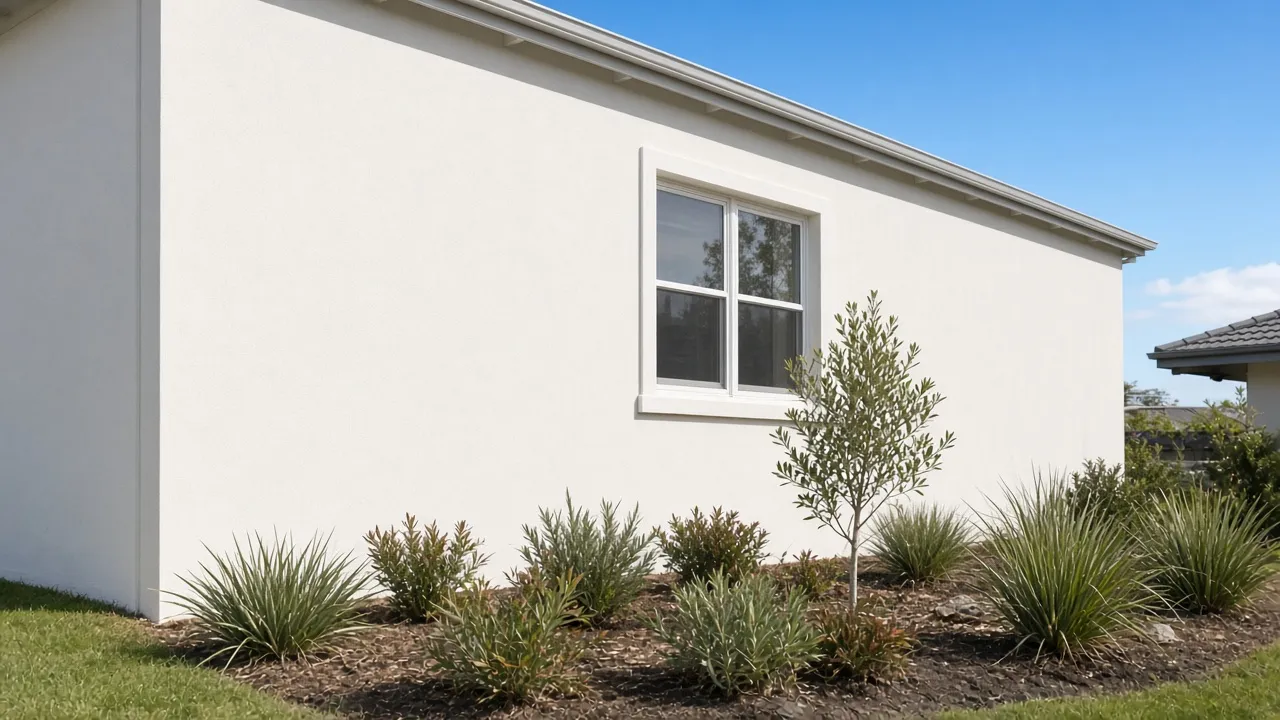
White powder blooming across your outdoor render, paint bubbling in sheets, or cracks that keep showing through a fresh coat? These are the three problems that trip people up when painting rendered walls in Perth, and they usually share one root cause: moisture. Render is porous, so it absorbs and releases water, and paint can’t hold properly when moisture is working against it from behind. This guide answers three questions homeowners ask often: what is the white powder coming through my render and can I paint over it, why is the paint on my render bubbling and flaking, and do I need to fix cracks before painting?
What Is the White Powder on Your Render?
It’s most likely efflorescence: a white, powdery or crusty deposit of salts on the surface of render and masonry.
Why it appears
Water moves through render and brickwork, dissolving natural salts as it goes. When that water reaches the surface and evaporates, the salts are left behind as a white deposit. The powder is a sign that moisture is moving through the wall, not a fault with the paint. Perth’s wet winters and hot dry summers can play a part, and coastal salt air can add to the problem, but the cause is often something specific, such as a leaking gutter or pipe, or rising damp.
Can you paint over it?
No. Paint over efflorescence and the salts keep coming through, pushing the coating off the wall. You’ll see bubbling, flaking and a chalky white bloom returning through the new paint. The deposit needs to be removed and the moisture dealt with first.
What to do about it
- Brush off the loose deposits while the wall is dry, and wear a mask while you do it.
- Find where the moisture is coming from and get it fixed.
- Let the wall dry out fully.
- Watch for a while to see if the salts return. If they do, the wall is still taking in moisture.
- Once the wall is dry and clean, use a suitable primer on the porous render. Our guide to what paint primer is and why it matters explains how it helps paint bond.

Why Is Paint on Render Bubbling and Flaking?
Peeling has plenty of general causes, and we cover them in our guide to peeling paint causes and fixes in Perth. On render, the usual suspects are more specific.
Moisture and salts pushing from behind
Water vapour and salts travelling through the wall build up under the paint film. The coating lifts into bubbles, then cracks and flakes away. If the bubbles are close to the ground or under a leaking downpipe, moisture is a likely cause.
Painting over damp or dusty render
Render that wasn’t properly dry, or a surface left chalky, dusty or dirty, gives paint nothing solid to grip. Winter rain can leave render damp for longer than it looks, so timing matters. Our guide to painting in winter in Perth covers what to watch for.
Loose or hollow render
Tap the wall gently with your knuckles. A hollow, drummy sound can mean the render has lost its bond with the wall underneath. Paint can’t hold a loose section in place, so it cracks and lifts again. Damaged sections need repairing before they’re painted. That’s what we do: we repair damaged render and plaster sections rather than painting over them.
Do You Need to Fix Cracks in Render Before Painting?
Yes. Paint can hide a crack for a while, but it doesn’t close it. Water gets in through the crack, the crack tends to reopen, and the paint over it splits.
Hairline cracks and larger cracks
Fine hairline cracks are common in render. They can come from shrinkage as the render cures, temperature swings between hot days and cool nights, and small movements in the building. These are normally patched with a suitable filler before painting. Before we paint, we patch cracks and repair damaged sections of render and plaster instead of just painting over them.
When to get a professional
If a crack is wide, growing, running through the brickwork as well as the render, or appearing near doors and windows that have started to stick, have a qualified professional look at it before any painting. Paint can’t fix movement in a building, and a growing crack needs to be understood first.
Fix the Source of the Moisture First
Efflorescence, bubbling and recurring cracks all lead back to water, so the cause has to be found before any paint goes on. Common culprits include rising damp, leaking or overflowing gutters, leaking pipes, blocked drainage, and garden beds or paving built up against the wall. Perth’s sandy soils drain quickly in some spots, but poor drainage around a house can still leave a wall wet.
Those jobs belong to the right trade, such as a plumber, roofer or damp specialist. Painters aren’t plumbers or roofers, so the source of the moisture has to be fixed first. Once the wall has dried out, it can be repaired and painted with a much better chance of the finish lasting.
How Rendered Walls Are Prepared and Painted
Every wall is different, but a proper repaint of rendered walls usually follows this order.
- Check the wall and the cause. Look for moisture, salts, cracks and loose or hollow areas.
- Clean the surface. Remove loose salts, flaking paint, dust and dirt so the surface is sound.
- Repair. Patch cracks and repair damaged render or plaster sections.
- Prime. Use a primer suited to porous render so the topcoat has something to grip.
- Paint. Apply an exterior paint suited to render and to Perth’s sun, heat and rain. Our guide to the best exterior paint for Perth homes is a good place to start.
Skipping the early steps is where most render repaints go wrong. If you’d like to see what a full exterior job involves, have a look at our exterior painting service in Perth.
Book Your Render Repaint
Ready to repaint your rendered walls once the moisture problem is sorted? Call 0474 157 273 or fill in our contact form to book your free quote. We’re licensed and insured, with over 20 years’ experience, and we email a written quote within 48 hours.
Frequently Asked Questions
No. The salts will keep pushing through and lift the paint. Brush off the loose deposits, fix the moisture source, let the wall dry fully and prime it before painting.
Usually because moisture or salts are building up behind the paint, or because the render was damp, dusty or loose when it was painted. Fixing the moisture and repairing the surface comes before repainting.
Yes. They should be patched with a suitable filler first, otherwise they tend to show through or reopen. Wide or growing cracks should be checked by a qualified professional before painting.
It depends on the wall being completely dry and on having a spell of suitable weather. Winter rain can leave render damp for longer than it looks. See our guide on painting in winter in Perth for more detail.
Yes. Before painting, we patch cracks and repair damaged render and plaster sections rather than just painting over them. If the cause is moisture, such as rising damp or a leaking gutter or pipe, that needs to be fixed by the right trade first, because painters aren’t plumbers or roofers.